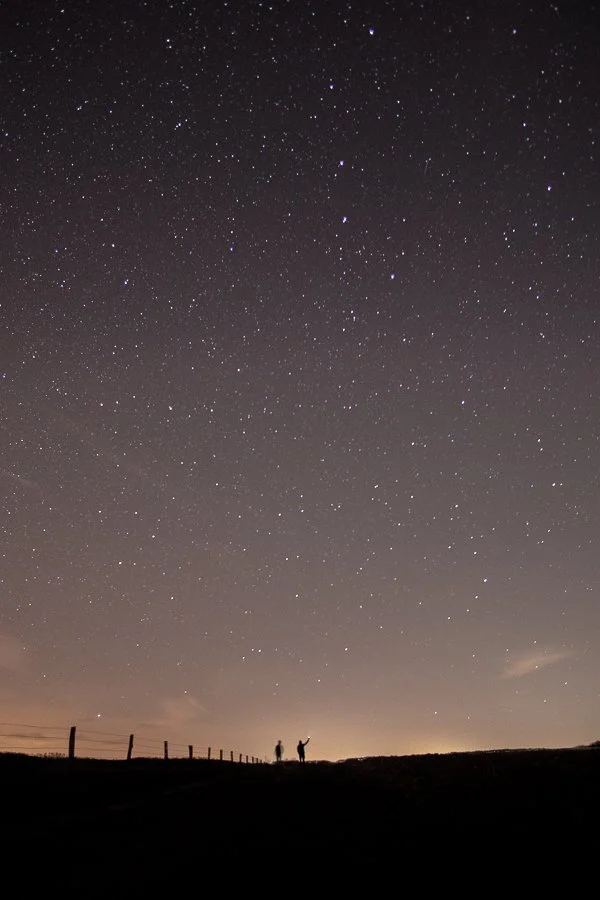
On sailors and stars and a compass slightly forgotten
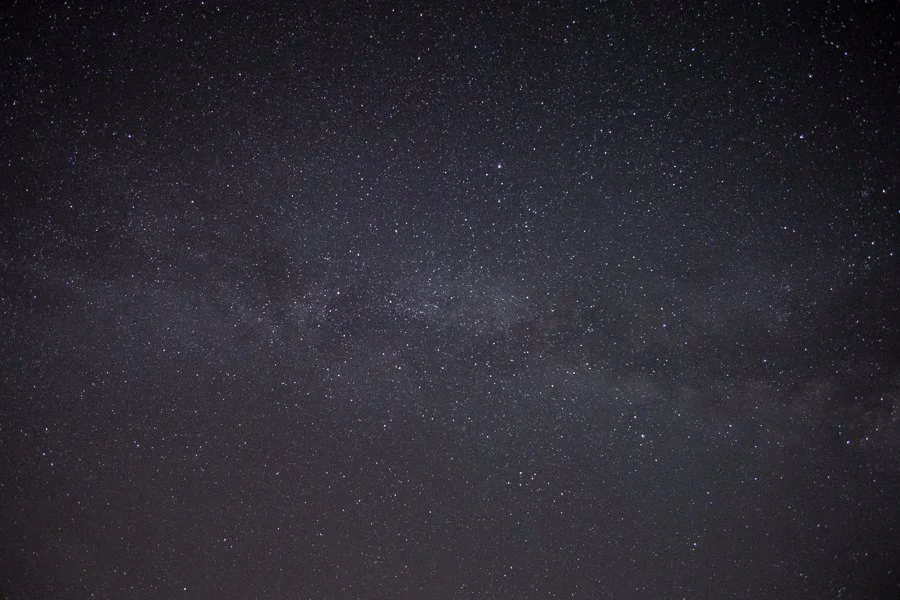
Pictures all taken from the backyard - such lucky views
I’m writing this on the first new moon of the lunar calendar, which feels oddly appropriate. A dark sky and no moon stealing the spotlight. A perfectly valid excuse to spend the evening thinking about stars.
At the beginning of this year, I visited Porto with a friend, and we joined a boat tour. For the final thirty minutes, the captain sailed out into the open ocean. The water was a little rough — my friend holding on for dear life, bless her — while I was sitting there thinking: aye, aye matey, let’s gooo. This is overwhelming. This is magnificent.
There was something about the sailboat moving into openness that rearranged my brain chemistry. I pictured myself raising the sails (enter Pirates of the Caribbean soundtrack), confidently steering into the horizon, wind in my hair. I seriously considered getting a boat myself. Never mind that I cannot sail at all, but we’ll cross that ocean when we get to it.
A month later, I stood on a snowy slope in Alpe d’Huez during a night snowshoe hike. Early evening turned into proper dark as I climbed, boots crunching in rhythm in the snow. It was beautiful and quiet and slightly dramatic in the way mountains always are. And once again, I was distracted by the night sky.
Moments like that always trigger the same thought: people once relied on this.
Luckily, the guide shared the fascination and regularly stopped to point things out. We elaborated on constellations, about how to recognize them without ‘cheating’. And about the small satisfaction of identifying something correctly with our own eyes. The realisation crossed my mind as it has probably a million times before, that long before we carried maps and apps in our pockets, people depended on the night sky to find their way. That dependence still amazes me.
The OG GPS
Back to that sailboat. Imagine standing on the deck of a ship in the middle of the ocean, with no land in sight for seven days or even weeks. No reassuring outline of a harbor. Just the horizon stretching endlessly in every direction. Or maybe not even: pitch-black night and calm water, without any visual reference whatsoever. Just dark sea below and dark sky above. I picture myself in that situation, and I’m already spiraling. Safe to say I would not survive the vibes.
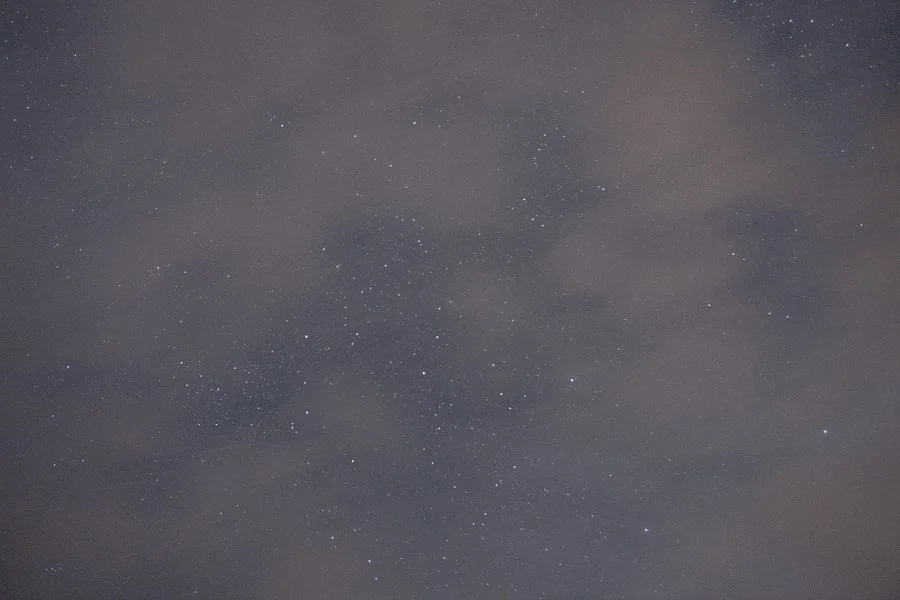
In the Northern Hemisphere, one star mattered most: Polaris, the North Star. Because it sits almost directly above Earth’s rotational axis, it appears neatly fixed while everything else seems to rotate around it. Find Polaris, and you find north. Measure its angle above the horizon, and you can determine your latitude.
To locate it, sailors often relied on Ursa Major, the Big Dipper. The two outer stars of its ‘bowl’ form a straight line that points directly to Polaris.
Navigators used a sextant to measure the angle between a star and the horizon. Combined with timekeeping and detailed charts, telling them where they were. And when clouds rolled in? Navigation became so much harder. Losing sight of the stars meant losing your main reference point. I would probably lose my mind too.
What fascinates me most is the trust involved. That faint shimmer above a restless sea was enough to cross oceans. Just light traveling across unimaginable distances, doing its quiet job. It’s basically a long-distance love story between humans and the universe.
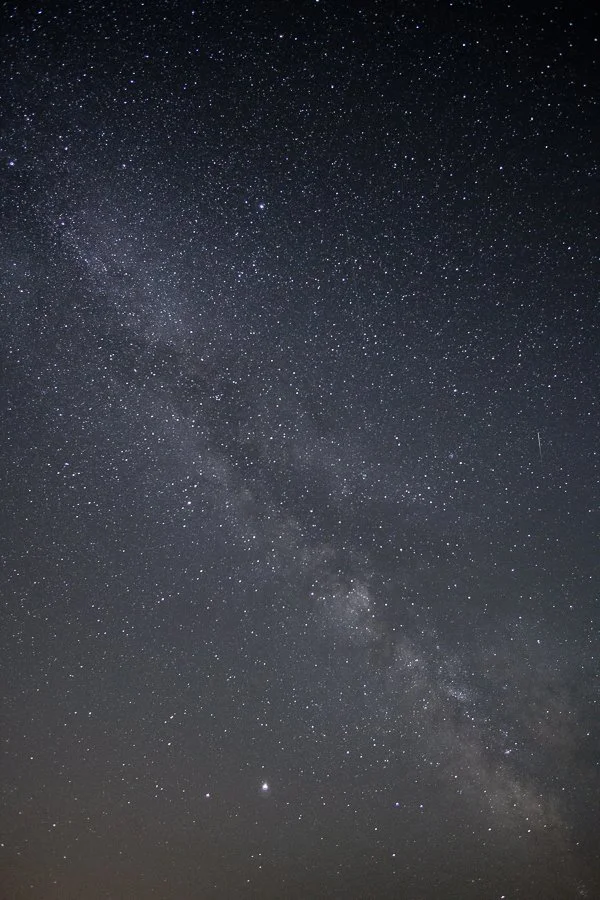
The fascination never quite settles
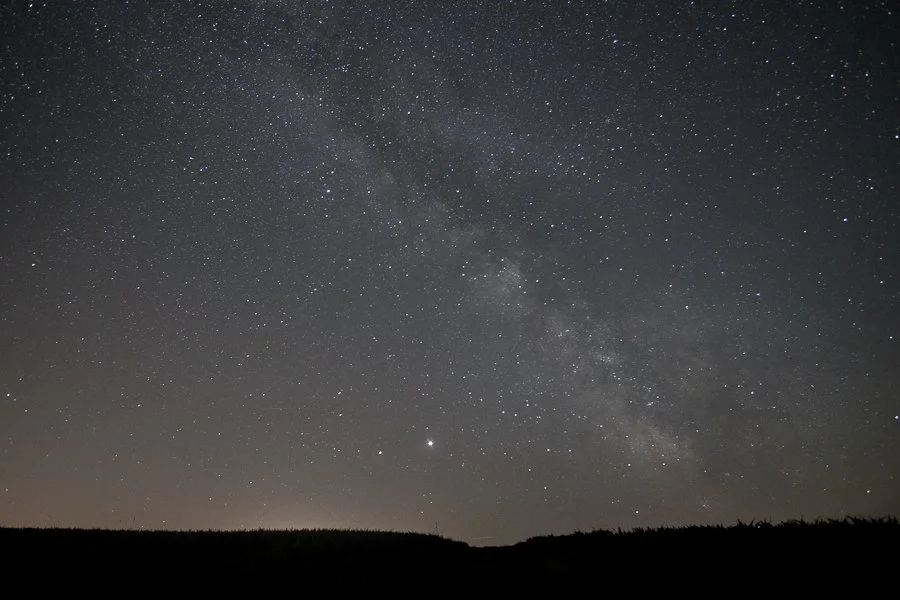
Back at our family farmhouse in Northern France, where light pollution is minimal, I often step outside at night with my camera and lie on the ground looking up. The Milky Way stretches overhead, and it feels endless and intimate at the same time. Thoughts incoming: we are standing on a floating rock in space, rotating, orbiting, expanding into a universe that is itself expanding, and I’m just casually here, identifying stars. Existentially freaky.
I try to recognize constellations nearby, half familiar, others mysterious. I use Stellarium often, pointing my phone upward to identify what I’m seeing.
And every time I read more about it, I’m reminded how much there is to know. Angles. Magnitudes. Mythologies. Distances that absolutely refuse to make sense. I understand it while reading, feel very informed, and then forget half of it again within days. But I don’t mind. Because every time I revisit the sky or reopen the app, I get to experience that same spark of awe again. How is this real? How are we able to perceive this at all? The fact that I cannot fully grasp it keeps it from ever becoming ordinary.
From sextants to smartphones
Today, of course, we navigate differently. GPS satellites orbit our humble abode. Our phones show us a blinking blue dot that tells us exactly where we are. A voice instructs us to turn left in 200 meters, and we yank the wheel.
And yet, when I think about sailors calculating their position with a sextant and a star chart, I cannot help but admire the attention it required. They observed, practiced, remembered. Their knowledge did not live in a device they could misplace or forget to charge. It lived in their eyes, adjusting to the darkness, and in their hands, holding steady against the movement of the sea.
I envy that, if I’m honest. Meanwhile, I am here cross-referencing books and opening apps to double-check whether I’m looking at a planet or confidently misidentifying a random bright dot.
Still, the real magic happens when I lower the screen and try to recognize just one constellation on my own. When I pause long enough to let my eyes adjust, and my memory work a little. There is a quiet satisfaction in that effort, as if some ancient, stubborn part of me appreciates being invited back into the process instead of outsourcing every single skill to technology.
A reminder of something vast
Perhaps that is why this subject keeps returning to me. Navigation is about orientation, about knowing where you stand in relation to something larger and more stable than yourself.
For sailors, Polaris offered that stability, as a fixed point in a moving world. Everything else could shift, but the star remained. When I stand under a dark sky, I feel a version of orientation that has nothing to do with productivity or deadlines. It is simply the awareness of being part of something vast and chaotically ordered. How comforting and mildly terrifying.
Now, I’m not planning to navigate an ocean anytime soon as I’m quite attached to being alive, and I strongly suspect the Atlantic would humble me within minutes. But I like knowing that if I ever found myself on a sailboat with no signal and no clue, the stars would still be there.
The same constellations offer direction without demanding a software update. Qualified and unbothered as always.